How Durable is Recycled Polyester Fabric Compared to Its Virgin Counterpart?
The shift towards sustainability is one of the most significant transformations in the modern textile industry. As a representative of sustainable fashion, recycled fiber not only brings new ideas and opportunities to the fashion industry but also injects vitality into the sustainable development of the entire textile field. It represents the fashion industry’s move towards a more environmentally friendly and sustainable direction. Central to this movement is recycled polyester fabric, a material that promises to reduce waste and conserve resources. However, for manufacturers, designers, and buyers, a critical question remains: can this eco-conscious alternative match the longevity and resilience of the well-established virgin polyester?
Understanding the Core Materials: A Foundation for Comparison
Before delving into performance comparisons, it is essential to understand the fundamental nature of both materials. At their chemical core, they are remarkably similar, which is the primary reason their durability can be so closely aligned.
What is Virgin Polyester?
Virgin polyester is a synthetic fabric derived from purified terephthalic acid (PTA) or dimethyl terephthalate (DMT) and monoethylene glycol (MEG), which are both products of petroleum. Through a process called polymerization, these components form polyethylene terephthalate (PET). This PET is then extruded through a spinneret to create long, continuous filaments. These virgin fibers are characterized by their high strength, consistency, and purity, having never been used or processed before. This pristine starting point is what has made virgin polyester a dominant force in textiles for decades, prized for its durability and reliability.
What is Recycled Polyester Fabric?
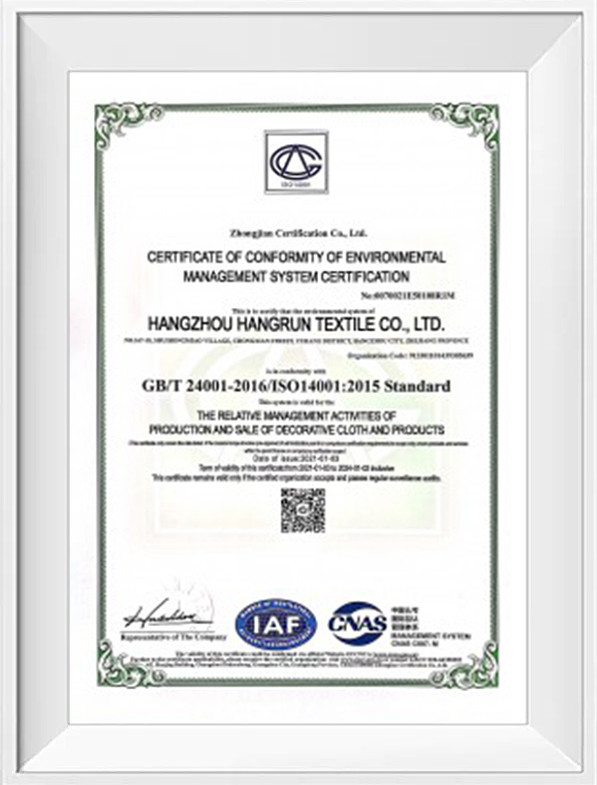
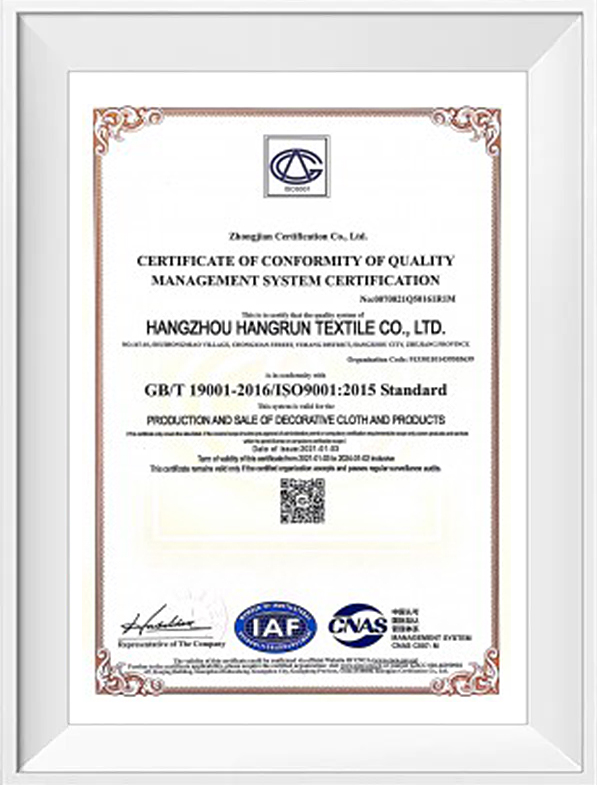
Recycled polyester fabric is most commonly made from post-consumer PET bottles or post-industrial polyester waste. The process involves collecting, sorting, cleaning, and shredding this waste into small flakes. These flakes are then melted down and re-polymerized or directly melted and extruded through a spinneret to form new filaments. The result is a recycled polyester fabric that shares the same chemical structure as virgin polyester. The most common certification for this process is the Global Recycled Standard (GRS), which verifies the recycled content and tracks it through the supply chain. A manufacturer holding a GRS certificate, like Hangzhou Hangrun Textile Co., Ltd. which obtained theirs in 2019, demonstrates a commitment to transparent and responsible production, focusing on eco-sustainability in everything they produce.
A Head-to-Head Analysis of Key Durability Metrics
Durability is not a single attribute but a combination of several physical properties. We will analyze the most critical ones to provide a comprehensive picture.
Tensile Strength and Tear Resistance
Tensile strength refers to the maximum load a fabric can withstand while being stretched before it breaks. Tear resistance is the measure of how well a fabric resists the propagation of a rip or tear.
In the early days of recycling technology, recycled polyester fabric often showed slightly lower tensile strength due to polymer degradation during the melting process. The repeated heating could cause a reduction in the molecular weight of the polymer chains. However, advancements in recycling technology have dramatically closed this gap. Modern mechanical and chemical recycling processes can now produce recycled polyester fabric with tensile and tear strength values that are nearly indistinguishable from those of virgin polyester.
For most applications, including upholstery and furnishing, the difference in strength is statistically insignificant and falls well within the required performance thresholds. The consistency of high-quality recycled polyester fabric makes it a robust choice for products that demand structural integrity.
Abrasion Resistance and Pilling
Abrasion resistance is the ability of a fabric to withstand surface wear from rubbing, which is a crucial factor for furnishings like sofas, chairs, and cushions. Pilling is the formation of small, tangled balls of fiber on the fabric’s surface, a direct result of abrasion.
The abrasion resistance of a polyester fabric is more influenced by the construction of the yarn and the fabric (e.g., weave density, filament type) than by its virgin or recycled origin. Both types of polyester can be engineered to achieve high abrasion resistance ratings, such as those measured by the Martindale test.
However, there is a nuanced difference. The process of recycling can sometimes result in slightly shorter polymer chains or variations in filament consistency. If not meticulously controlled, this can make a lower-quality recycled polyester fabric marginally more susceptible to pilling over an extended period compared to a premium virgin equivalent. Reputable manufacturers mitigate this by using high-quality source materials and advanced spinning techniques, ensuring their recycled polyester fabric meets high performance standards for abrasion.
Colorfastness and UV Resistance
Colorfastness refers to a fabric’s resistance to fading or bleeding its color when exposed to factors like washing, light, or rubbing. UV resistance is particularly important for furnishings exposed to sunlight.
The dyeability and colorfastness of recycled polyester fabric are excellent and comparable to virgin polyester. Since the base polymer is the same, it accepts dyes in a similar manner. The key to achieving vibrant, long-lasting colors lies more in the dyeing techniques and quality of dyes used than in the origin of the fiber.
Similarly, UV resistance is a function of polymer additives, not the polymer itself. Both virgin and recycled polyester can be treated with UV-inhibiting stabilizers during the spinning process to enhance their resistance to sunlight degradation, making them suitable for both indoor and outdoor upholstery applications.
The following table summarizes the comparison of these key properties:
| Durability Metric |
Virgin Polyester |
Recycled Polyester Fabric |
Key Takeaway |
| Tensile Strength |
Consistently High |
High (Modern processes have closed the gap) |
Difference is minimal for most applications. |
| Abrasion Resistance |
Excellent |
Excellent (Dependent on quality control) |
Governed more by fabric construction than fiber origin. |
| Pilling Tendency |
Low |
Low to Moderate (Varies with fiber quality) |
High-quality rPET shows negligible pilling. |
| Colorfastness |
Excellent |
Excellent |
Dependent on dyeing process, not fiber origin. |
| UV Resistance |
Excellent (with additives) |
Excellent (with additives) |
A function of chemical treatments, not recycling. |
Factors Influencing the Durability of Recycled Polyester Fabric
While the inherent durability is comparable, several factors specific to the production of recycled polyester fabric can influence its final performance.
The Role of Source Material and Processing
The quality of the recycled polyester fabric is directly linked to the quality of its input materials. Post-consumer PET bottles, which are made from high-intrinsic viscosity (IV) PET, are an excellent source material. However, the presence of contaminants or a mixture of colored plastics can complicate the recycling process and potentially affect the consistency of the resulting polymer melt. Advanced sorting and thorough cleaning are critical steps that manufacturers must master to produce a high-quality, consistent recycled polyester yarn.
The recycling method itself is also a factor. Mechanical recycling, which involves melting existing polyester, can lead to some thermal degradation. Chemical recycling, which breaks the polymer down to its base monomers and re-polymerizes it, can produce a fiber that is virtually identical to virgin polyester in its molecular structure and performance, but at a higher cost.
The Importance of Quality Control and Certifications
This is where the manufacturer’s expertise becomes paramount. A company with a dedicated quality control system, modern machinery, and relevant certifications is far more likely to produce a durable and reliable recycled polyester fabric. The Global Recycled Standard (GRS) is a critical certification, as it not only verifies the recycled content but also includes environmental and social criteria, implying a higher standard of overall production quality. When a manufacturer invests in obtaining and maintaining such certifications, it signals a commitment to producing a product that does not compromise on performance for the sake of sustainability.
Applications: Where Recycled Polyester Fabric Excels
Given its proven durability, recycled polyester fabric is a versatile material suitable for a wide range of demanding applications, particularly in the home furnishing sector.
Upholstery and Furnishing Fabrics
For companies specializing in decorative textiles, the performance of recycled polyester fabric in upholstery is a key consideration. It demonstrates excellent resilience against the daily wear and tear experienced by furniture. Its high abrasion resistance makes it suitable for sofas, armchairs, and office furniture. Furthermore, its inherent strength ensures that seams and joints remain secure over time. The ability to achieve excellent colorfastness means that furnishings will retain their aesthetic appeal without significant fading, a crucial factor for both residential and commercial interiors. The company Hangrun Textile, for instance, supplies recycled fabric for upholstery and furnishing use, recognizing its capacity to meet the durability demands of international markets in the US and Europe.
Other Home Textiles and Accessories
Beyond large-scale upholstery, the durability of recycled polyester fabric makes it an ideal choice for other home textile products. This includes durable cushions, throws, curtains, and table runners. These items benefit from the fabric’s resistance to wrinkling, shrinking, and stretching, maintaining their shape and appearance through repeated use and cleaning. The modern consumer’s desire for sustainable yet long-lasting home goods is perfectly met by high-performance recycled polyester fabric.
Conclusion: A Durable and Sustainable Choice for the Future
The question of whether recycled polyester fabric is as durable as virgin polyester has a clear and affirmative answer: yes, it can be. Technological advancements in recycling processes and stringent quality control have elevated the performance of recycled polyester fabric to a level that is on par with virgin polyester for almost all practical applications. While minor variations may exist in specific metrics like pilling tendency, these are often negligible and can be effectively managed through superior manufacturing practices.
The durability of the final fabric is less about its “recycled” label and more about the quality of the source material, the sophistication of the production technology, and the rigor of the manufacturer’s quality assurance. For buyers and brands, the focus should shift from questioning the inherent capability of recycled polyester fabric to carefully selecting suppliers who can demonstrate proven expertise and reliable certifications like the GRS. As the industry continues to evolve, recycled polyester fabric stands not just as a symbol of eco-consciousness, but as a proven, high-performance material that injects vitality into the sustainable development of the entire textile field without compromising on quality or longevity.


 ENGLISH
 English
 Español
 عربى
عربى