In today's highly competitive home furnishing market, Patterned Chenille Upholstery Fabric has become a frequently searched keyword. This trend stems not only from consumers' pursuit of comfortable homes but also from the design industry's re-evaluation of high-quality fabrics. As people's demands for home texture increase, this textured and patterned chenille furniture fabric is gradually standing out from traditional fabrics, becoming a focus for sofas, armchairs, backrests, headboard upholstery, and high-end custom furniture.
Why are more and more people choosing patterned chenille as their main interior fabric?
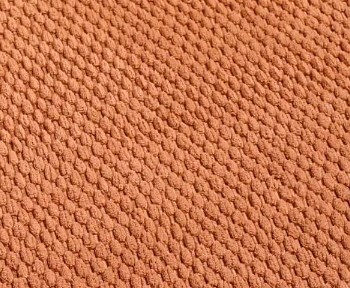
When choosing fabrics for their homes, visual presentation and tactile experience are often the deciding factors. The special yarn structure of Patterned Chenille Upholstery Fabric gives the fabric a full and soft three-dimensional feel. This visual weight and warmth make it perform well in various styles, including modern, light luxury, neo-Chinese, and retro. At the same time, the pattern design creates unique depth and layering in the interweaving of the chenille yarns, making the style expression of the space more three-dimensional. People choose chenille not only for its soft, luxurious appearance, but also for its delicate yet substantial tactile feel, adding an irreplaceable warmth to furniture.
Is the durability of Patterned Chenille Upholstery Fabric truly superior to ordinary fabrics?
In the interior design industry, fabric durability and abrasion resistance have always been key considerations. The structure of chenille fabric makes its fibers denser, resulting in greater abrasion resistance and allowing the fabric to maintain its shape and color even after prolonged use. Many designers prioritize chenille when selecting fabrics for projects, not only because of its beautiful texture but also because its durability ensures that furniture retains its aesthetic appeal over time. With upgraded manufacturing processes, patterned chenille has further improved its colorfastness and tactile stability, providing a more reliable fabric option for frequently used public areas and home spaces.
How do pattern variations affect the visual effect of Patterned Chenille Upholstery Fabric?
The charm of Patterned Chenille Upholstery Fabric largely stems from its richly varied pattern designs. Different yarn thicknesses and weaving methods determine the depth, placement, layering, and overall rhythm of a pattern. The presentation of a pattern is not merely a visual impression; it creates an emotional atmosphere within a space. In modern styles, people prefer simple, soft textures to make the space more serene; in retro or light luxury styles, they tend to favor heavier geometric or abstract patterns, making the furniture the visual center. The uniquely fluffy fibers of chenille fabric make the pattern's tactile presentation more three-dimensional. This dual experience of sight and touch is an effect difficult to achieve with other flat fabrics.
Where does the comfort of Patterned Chenille Upholstery Fabric manifest itself in furniture upholstery?
When using chenille as upholstery for sofas or chairs, people often experience a soft yet supportive feel. This comfort comes from the fluffy structure between the fabric fibers. Unlike velvet fabrics, it doesn't easily exhibit a clear directionality, nor does it slip like smooth fabrics. Instead, it provides a stable, enveloping feel, making the contact with the body more natural. Soft yet elastic, the fabric allows it to conform to the shape of the internal sponge or filling, making the seating experience fuller. The moisture-wicking and breathable properties of chenille yarn allow furniture to maintain a relatively comfortable feel in different seasons.
What kind of spatial effect can Patterned Chenille Upholstery Fabric bring to interior design?
Good upholstery fabrics are not only the outer garment of furniture, but also an important component of the ambiance of a space. The thickness and three-dimensional texture of Patterned Chenille Upholstery Fabric give it a strong ability to create a visual atmosphere. Under light, the subtle shadows between the fibers give furniture a deeper sense of depth. This characteristic makes chenille fabric perform consistently well in photography, displays, and everyday lighting. Its pattern extensibility also allows designers to create a unified visual language across sofas, upholstered walls, and cushions, improving the overall harmony of the space. Applying it to large areas of upholstery instantly enhances the warmth of the space, creating a strong sense of enclosure.
Is Patterned Chenille Upholstery Fabric suitable for modern lifestyles?
With the fast pace of life, people have higher demands for the ease of handling and practicality of fabrics. After improvements, chenille fabric exhibits more stable wrinkle and deformation resistance, while its surface fibers are less prone to dust accumulation, simplifying daily care. In modern homes with typical usage frequencies, the durability and comfort of this fabric are particularly outstanding. It meets the needs of daily household use while creating a softer spatial atmosphere, resulting in a home environment that combines quality and a sense of life.
As the industry refocuses on the inherent texture of materials, the value of Patterned Chenille Upholstery Fabric becomes even more apparent. It's not just fabric, but a form of spatial expression. Its texture, pattern, feel, durability, and design flexibility are gradually making it a core material in soft furnishings. Furniture manufacturers, interior designers, and consumers alike can derive visual, tactile, and emotional satisfaction from this material. Therefore, in future soft furnishing trends, this fabric will inevitably appear more frequently, its application scenarios will continue to expand, and it will bring new aesthetic directions to the home furnishing industry.


 ENGLISH
 English
 Español
 عربى
عربى